
Seafood Paella Recipe: Authentic Spanish Classic Made Easy
Introduction
The moment you lift the lid on a bubbling pan of seafood paella, the intoxicating aroma of saffron, garlic, and ocean-fresh seafood creates pure magic. This iconic Spanish dish from Valencia isn’t just a recipe it’s a celebration, a gathering of friends and family around a single pan of golden rice studded with jewels from the sea.
I’ve spent years perfecting this authentic seafood paella recipe, and today I’m sharing the techniques that transform simple ingredients into Spain’s most beloved dish. Whether you’re cooking for a festive gathering or treating yourself to something special, this paella delivers restaurant-quality results right in your home kitchen. If you love impressive one-pan dishes, you’ll also appreciate my creamy seafood pasta for Italian-inspired seafood nights.
The best part? While paella has a reputation for being difficult, I’ll show you the key techniques that make it surprisingly approachable, even for home cooks tackling it for the first time.
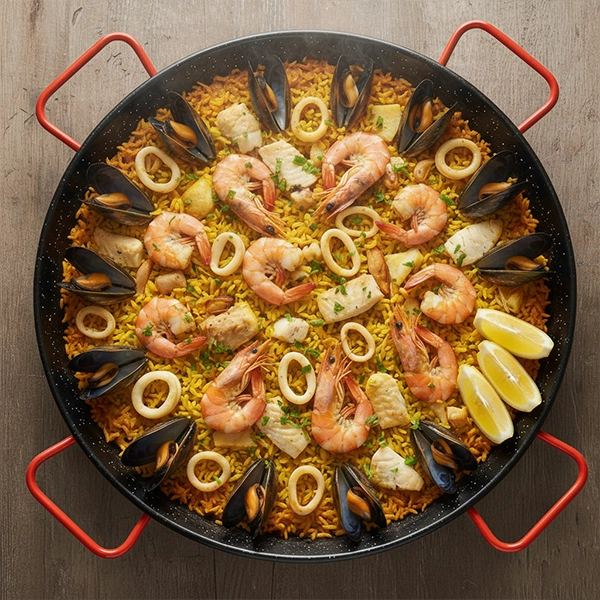
Table of Contents
Understanding Authentic Paella
Paella originated in Valencia, Spain, where rice farmers would cook whatever ingredients they had available in a wide, shallow pan over an open fire. The dish’s name comes from the “paellera”—the traditional pan that gives paella its distinctive character.
True Valencian paella traditionally features rabbit, chicken, and snails, but seafood paella (paella de mariscos) has become equally beloved, especially in coastal regions. The defining characteristics of authentic paella include the socarrat—that coveted crispy, golden rice crust on the bottom—and the technique of cooking rice uncovered, allowing it to absorb flavors while developing texture.
What You’ll Need For Seafood Paella Recipe
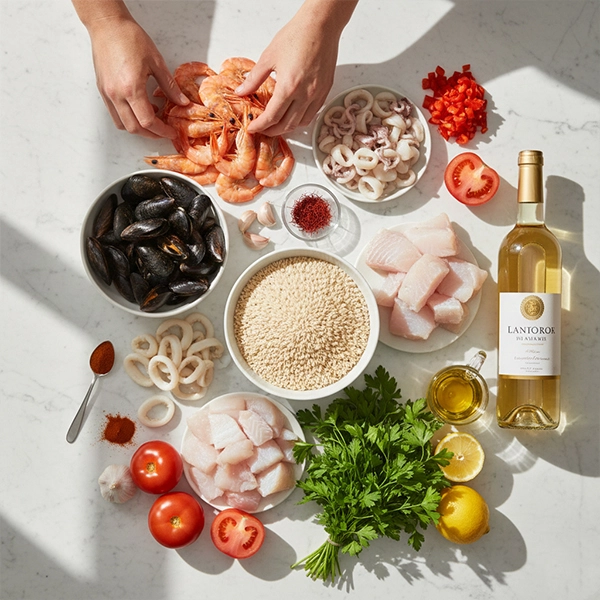
The Seafood Selection
- 1 lb large shrimp (shells on for more flavor, deveined)
- 1 lb mussels (cleaned and debearded)
- 1/2 lb calamari rings (fresh or frozen)
- 1/2 lb firm white fish (halibut or cod, cut into chunks)
- Optional: Clams, scallops, or lobster tails
Rice and Aromatics
- 2 cups bomba rice or Spanish paella rice (short-grain)
- 1 large onion (finely diced)
- 4 cloves garlic (minced)
- 1 red bell pepper (sliced)
- 2 ripe tomatoes (grated or finely chopped)
Flavor Foundation
- 1/2 teaspoon saffron threads (the soul of paella)
- 4 cups seafood stock or fish broth (warm)
- 1/2 cup dry white wine
- 3 tablespoons olive oil
- 1 teaspoon smoked paprika
- 1 bay leaf
- Salt and black pepper to taste
For Garnish
- Fresh parsley (chopped)
- Lemon wedges
- Peas (fresh or frozen, optional but traditional)
Essential Equipment
The right pan makes all the difference in paella. A traditional paellera (wide, shallow pan) allows rice to cook in a thin layer, ensuring even cooking and that prized socarrat. A 15-inch paella pan serves 4-6 people perfectly. If you don’t have a paellera, use the widest, shallowest skillet or sauté pan you own—at least 12 inches.
You’ll also need a wooden spoon for stirring and aluminum foil for the resting period. According to Serious Eats’ guide to paella equipment, the pan’s wide surface area is crucial for proper evaporation and rice texture.
Step-by-Step Instructions
Step 1: Bloom the Saffron
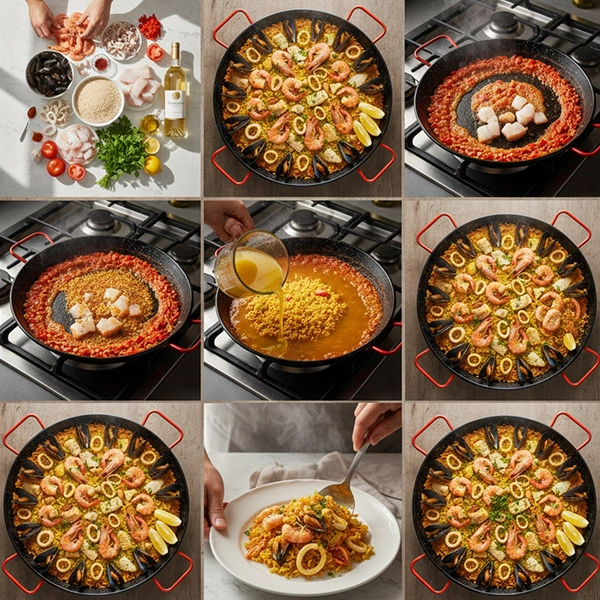
Crush the saffron threads between your fingers and steep them in 1/4 cup of warm seafood stock for at least 10 minutes. This releases the saffron’s golden color and distinctive earthy-floral flavor that’s irreplaceable in authentic paella.
Step 2: Build the Sofrito Base
Heat olive oil in your paella pan over medium heat. Add the diced onion and cook for 5 minutes until softened and translucent. Stir in the minced garlic and sliced red bell pepper, cooking for another 3 minutes until fragrant.
Add the grated tomatoes and smoked paprika, stirring constantly for 3-4 minutes until the mixture thickens and deepens in color. This sofrito forms the flavor foundation of your paella—don’t rush this step.
Step 3: Add Rice and Broth
Pour the rice into the pan, stirring to coat every grain with the sofrito. Toast the rice for 2 minutes, allowing it to absorb the flavors. Pour in the white wine and let it sizzle and reduce by half.
Add the warm seafood stock, saffron liquid, and bay leaf. Stir gently to distribute ingredients evenly, then stop stirring completely. This is crucial from this point forward, resist the urge to stir. Stirring releases starch and creates creamy risotto instead of the distinct, separated grains paella requires.
Step 4: Layer the Seafood
After the rice has been simmering for 10 minutes, nestle the seafood into the rice. Start with the fish chunks and calamari (they take longest), then add shrimp and mussels on top, arranging them decoratively with mussels hinge-side down so they open beautifully.
Scatter peas across the surface if using. The seafood will cook gently in the steam and bubbling liquid, absorbing flavors while staying tender.
Step 5: Achieve the Socarrat
Cook for another 10-12 minutes over medium heat, rotating the pan occasionally for even cooking if your burner has hot spots. Listen carefully—when you hear a gentle crackling sound and smell a toasty aroma, the socarrat is forming on the bottom. This caramelized rice crust is the hallmark of perfectly cooked paella.
Increase heat to medium-high for the final 2 minutes to intensify the socarrat, watching carefully to avoid burning. For expert tips on achieving perfect socarrat, check out this Spanish paella cooking guide.
Step 6: Rest and Serve
Remove the pan from heat, cover loosely with aluminum foil, and let rest for 5 minutes. This allows the rice to finish steaming and the flavors to meld. Remove the foil, garnish with fresh parsley and lemon wedges, and bring the entire paella pan to the table for dramatic presentation.
Pro Tips for Perfect Paella
Use the Right Rice: Bomba rice is worth seeking out it absorbs three times its volume in liquid without becoming mushy. Calasparra rice is another excellent Spanish variety. Avoid arborio or long-grain rice.
Don’t Stir After Adding Liquid: This is the golden rule. Stirring creates creamy, risotto-like texture instead of the distinct grains paella should have.
Heat Management is Critical: The liquid should maintain a steady simmer, not a rolling boil. Too high and you’ll burn the bottom before the rice cooks; too low and you’ll get mushy rice without socarrat.
Stock Temperature Matters: Always add warm stock to the pan. Cold liquid drops the temperature dramatically and extends cooking time unpredictably.
The Socarrat Sound: Listen for that gentle crackling, toasty sound. It’s your cue that the bottom layer is caramelizing perfectly.
Seafood Freshness: Fresh seafood makes a dramatic difference. Buy from trusted sources and use within 24 hours for best results. The USDA seafood safety guidelines provide helpful storage tips.
Serving Your Seafood Paella
Seafood Paella Recipe is served family-style, directly from the pan at the center of the table. Provide everyone with a wooden spoon or fork and let them dig in from their section of the pan—this communal eating is part of the paella tradition.
Perfect Pairings:
- Crisp white wine like Albariño or Verdejo
- Simple green salad with sherry vinaigrette
- Pan con tomate (tomato bread) as an appetizer
- Spanish olives and Manchego cheese to start
For more Spanish-inspired dishes, explore our complete seafood recipes collection featuring Mediterranean flavors.
Variations to Try
Traditional Valencian Paella
Replace seafood with chicken thighs, rabbit, and green beans for the original version from Valencia’s rice fields.
Mixed Paella (Paella Mixta)
Combine seafood with chicken and chorizo for a hearty version that pleases everyone. This is popular in restaurants though not traditional.
Vegetarian Paella
Use seasonal vegetables like artichokes, bell peppers, asparagus, and green beans with vegetable broth. Still delicious without the seafood.
Black Paella (Paella Negra)
Add squid ink to the broth for dramatic black rice studded with seafood—visually stunning and intensely flavored.
Storage and Reheating
Paella is best enjoyed immediately while the socarrat is crispy. However, leftovers can be stored in an airtight container in the refrigerator for up to 2 days. The rice will soften and the socarrat will disappear, but the flavors remain delicious.
To reheat, add a splash of seafood stock to a skillet, add the paella, and heat gently over medium-low, stirring occasionally. You won’t recapture the original texture, but you can create a new socarrat by leaving it undisturbed for the last few minutes. Microwave reheating works but sacrifices texture—use 50% power and stir halfway through.
For food safety, follow FoodSafety.gov’s storage guidelines when storing seafood dishes.
Common Questions
Can I make paella without saffron? Saffron is traditional and provides paella’s signature flavor and color, but you can substitute with turmeric for color (though flavor differs significantly). Some cooks use a combination of turmeric and smoked paprika as a budget-friendly alternative.
Why can’t I stir paella like risotto? Stirring releases starches from the rice, creating a creamy texture. Paella should have distinct, separate grains with a firm bite, not the creamy consistency of risotto.
What if I don’t have a paella pan? Use the widest, shallowest pan you own. A large cast-iron skillet or wide sauté pan works. You may need to adjust cooking times slightly for deeper pans.
How do I know when paella is done? The rice should be tender with a slight bite, all liquid absorbed, and you should hear/smell the socarrat forming. Taste a grain from the center—it should be cooked through without mushiness.
Can I make paella ahead of time? Paella is really best made and served immediately. The socarrat and rice texture suffer when reheated. If you must prep ahead, prepare your sofrito and clean your seafood, then cook the paella fresh when ready to serve.
Final Thoughts
Mastering seafood paella connects you to centuries of Spanish culinary tradition. While it may seem intimidating at first, the technique is straightforward once you understand the key principles: build flavor in layers, use the right rice, don’t stir after adding liquid, and listen for that magical socarrat.
The beauty of paella lies in its flexibility—use whatever fresh seafood looks best at the market, adjust seasonings to your taste, and don’t stress over perfection. Even slightly imperfect paella tastes incredible when shared with people you love around a communal pan.
Once you’ve tried this recipe, experiment with different seafood combinations or try the traditional Valencian version. Each paella you make will teach you something new about heat management, timing, and flavor building. Much like perfecting my chicken cutlet recipe, paella rewards practice with increasingly delicious results.
Now grab your widest pan, some saffron, and the freshest seafood you can find. It’s time to bring the flavors of coastal Spain to your table.